
Economy
Economy
10 Feb, 2026
Zelenskyy Warns Ukraine Faces Critical Choice Amid Controversial US Peace Proposal
Emmanuel Santos
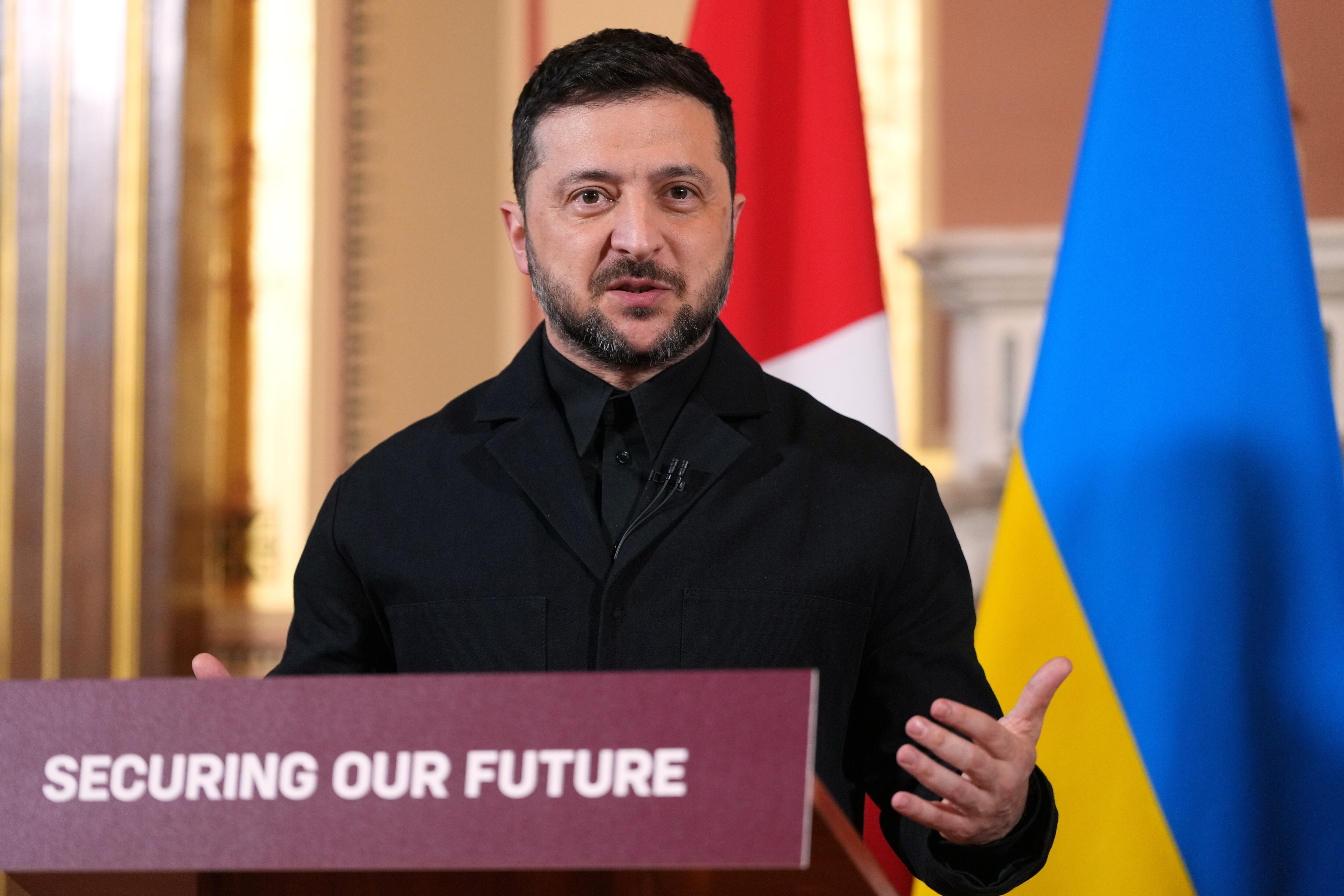
KYIV — Ukrainian President Volodymyr Zelenskyy issued a grave warning on Friday about a United States-proposed peace plan that endorses many of Russia’s key demands, stating that Ukraine faces the difficult prospect of either compromising its dignity and freedom or risking the loss of crucial American support.
The 28-point plan, advocated by former US President Donald Trump, who urged Kyiv to accept it within a week, includes substantial territorial concessions, restrictions on Ukraine’s military capabilities, and a permanent renunciation of NATO membership ambitions. Trump set a deadline of Thursday for Ukraine’s acceptance during an interview with Fox News Radio.
Speaking from the street outside his office—a rare venue for his major speeches—Zelenskyy appealed for national unity and reaffirmed his commitment to defend Ukrainian sovereignty. He stated, "Now is one of the most difficult moments of our history... Now, Ukraine can face a very difficult choice — either losing dignity or risk losing a major partner. I will fight 24/7 to ensure that at least two points in the plan are not overlooked – the dignity and freedom of Ukrainians."
Two anonymous sources revealed that Washington threatened to halt intelligence sharing and weapons supplies if Ukraine declined the agreement. However, a senior US official later denied that any such threat was issued.
Russian President Vladimir Putin characterized the US proposal as a potential foundation for ending the nearly four-year conflict, while also asserting that Kyiv and its European allies fail to understand Russia’s military realities.
President Zelenskyy engaged in discussions with British, German, and French leaders and spoke with US Vice President JD Vance, agreeing for their teams to seek a practical path to peace. Yet, Zelenskyy cautiously refrained from outright rejecting the US plan to maintain diplomatic relations, emphasizing its goal must be a "real and dignified peace."
Nevertheless, Ukraine has previously dismissed the plan as a capitulation, and acceptance could provoke significant political, social, and economic turmoil, according to experts like Tim Ash from Britain’s Chatham House think tank.
In parallel, German Chancellor Friedrich Merz spoke with Trump and described their conversation as constructive, coordinating next steps at the advisory level. The peace plan is anticipated to be a key topic at the G20 summit in Johannesburg, where European leaders will attend despite Trump’s boycott.
Three sources indicated Ukraine is crafting a counterproposal in collaboration with Britain, France, and Germany, who were not consulted on the US initiative and have expressed strong support for Kyiv’s position.
EU foreign policy chief Kaja Kallas warned, "We all want this war to end, but how it ends matters. Russia has no legal right whatsoever to any concessions from the country it invaded. This is a very dangerous moment for all."
US officials assert the plan was devised after consultation with Rustem Umerov, a close Zelenskyy ally and secretary of Ukraine's National Security and Defense Council. Umerov, however, denied endorsing the plan's terms, describing his involvement as technical.
Key provisions of the US plan require Ukraine to relinquish control over territories in eastern provinces claimed by Russia, limit its armed forces to 600,000 troops, forgo NATO membership, and accept that NATO will not station forces on its soil. In return, sanctions on Russia would gradually be lifted, Moscow would be welcomed back into the G8, and frozen Russian assets would be pooled in an investment fund with Washington receiving a share of the profits.
Critically, Ukraine’s demand for enforceable security guarantees akin to NATO's mutual defense clause appears only briefly in the plan, without detailed assurances.
Trump has simultaneously acknowledged some Russian justifications for its invasion and expressed frustration with Moscow. Last month, he canceled a planned Putin summit and imposed significant sanctions on Russian oil companies, set to take full effect on Friday.
Addressing the sanctions, Trump said, "Their whole economy is based on oil," affirming he would maintain the restrictions until the US peace plan was implemented.
As the conflict enters a pivotal phase, Ukraine wrestles with an excruciating decision that balances sovereignty, international alliances, and the hope for peace.
Recommended For You
Breakthrough RNA Therapy Shows Promise in Reversing ALS Nerve Damage
Feb 10, 2026
Emmanuel Santos

Malaysian National Sentenced to Life for Possession of 1.48 Tons of Methamphetamine in the Philippines
Feb 10, 2026
Francisco Castillo

BPI Introduces Affordable Insurance Covering Cancer, Stroke, and Heart Attack
Feb 10, 2026
Jasmine Torres

Introducing a Social News Blog Focused on Politicians and Their Circles
Feb 10, 2026
Emmanuel Santos