
World
World
24 Jan, 2026
Global Climate Deal Agreed at COP30, Boosting Aid for Developing Nations While Sidestepping Fossil Fuel Debate
Emmanuel Santos
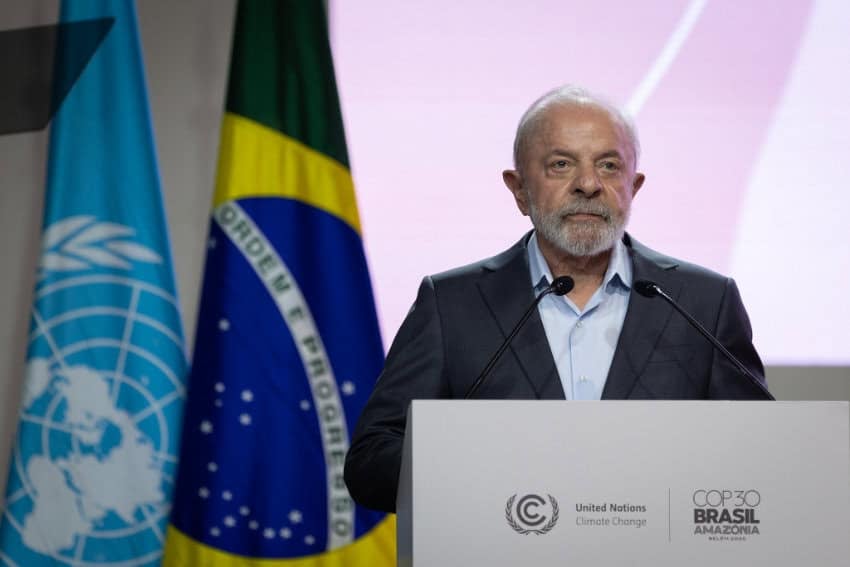
At the COP30 climate summit held in Belem, Brazil, world governments reached a consensus on a compromise agreement aimed at enhancing financial aid for developing countries battling the adverse effects of global warming. However, the deal notably avoids addressing the role of fossil fuels, a central and contentious issue in climate negotiations.
Despite the absence of the United States’ official delegation—the world’s largest historic carbon emitter—nations sought to present a united front on climate action. Wopke Hoekstra, the European Union’s climate commissioner, expressed cautious optimism, stating, "We should support it because at least it is going in the right direction."
The agreement inaugurates a voluntary initiative designed to accelerate climate efforts and help countries fulfill their existing emission reduction commitments. Crucially, it urges wealthy nations to triple financial contributions by 2035 to assist developing countries in adapting to the mounting effects of climate change.
While scientific assessments indicate that current national pledges have significantly decreased projected warming, experts agree these measures fall short of limiting global temperature rise to 1.5 degrees Celsius above pre-industrial levels — a threshold beyond which catastrophic climate impacts become increasingly likely.
Developing nations have persistently highlighted their immediate need for funding to cope with already manifest problems such as sea-level rise, intensified heat waves, droughts, floods, and storms. The new accord addresses this by launching a process to align international trade policies with climate objectives, acknowledging concerns that increasing trade barriers could impede the dissemination of clean technologies.
Avinash Persaud, Special Advisor to the President of the Inter-American Development Bank, emphasized the significance of financing within the agreement, noting, "The accord’s focus on finance is crucial as climate impacts grow. But I fear the world still fell short on more rapid-release grants for developing countries responding to loss and damage. That goal is as urgent as it is hard."
A major sticking point during negotiations was the inclusion of explicit language calling for a transition away from fossil fuels. The European Union advocated for such wording, but strong opposition from the Arab Group, including Saudi Arabia, led to an omission in the main agreement. Instead, this matter was addressed in a supplementary text introduced by the host nation, Brazil, following marathon all-night talks.
The COP30 consensus reflects a delicate balance between advancing climate finance and maintaining geopolitical cooperation, underscoring the complexities nations face in confronting global warming collectively.
Recommended For You

Former Bamban Mayor Seeks to Stay at Pasig Female Dormitory Following Human Trafficking Conviction
Jan 24, 2026
Emmanuel Santos

Philippines Aims to Reverse Decline in Digital Competitiveness Through Major Infrastructure Reforms
Jan 24, 2026
Ricardo Fernandez

Malaysian National Sentenced to Life for Possession of 1.48 Tons of Methamphetamine in the Philippines
Jan 24, 2026
Francisco Castillo
MORE Power Announces November Electricity Rate Increase in Iloilo City
Jan 24, 2026
Carmela Diaz